Howard’s Appliances filed for Chapter 11 bankruptcy on December 10, 2025, after shutting down its Southern California retail operations. The company’s bankruptcy case is still active in September 2026, but the situation is different from a typical Chapter 11 turnaround: court filings indicate that Howard’s planned to liquidate its remaining assets and dissolve the business. A creditor has also asked the court to convert the case from Chapter 11 to Chapter 7, with a hearing scheduled for September 30, 2026.
Howard’s Appliance Bankruptcy: Quick Facts
| Detail | Current information |
|---|---|
| Company | Howard’s Appliances, Inc. |
| Industry | Appliance retail |
| Founded | 1946 |
| Bankruptcy | Chapter 11 |
| Filing date | December 10, 2025 |
| Bankruptcy case | 2:25-bk-21116-BB |
| Court | U.S. Bankruptcy Court, Central District of California |
| Retail shutdown | December 6, 2025 |
| Remaining retail operations | Closed |
| 2026 development | Creditor filed a motion to convert the case to Chapter 7 |
| Conversion hearing | September 30, 2026 |
| Current status | Bankruptcy case remains active |
What Happened to Howard’s Appliance?
Howard’s Appliances, a long-established Southern California retailer of appliances and mattresses, abruptly shut down its retail operations on December 6, 2025.
The shutdown came only a few days before the company formally filed for Chapter 11 bankruptcy protection.
The company had been acquired by S5 Equity in April 2025. At the time of the acquisition, the buyer described the transaction as part of an effort to build on Howard’s long-standing retail business and strengthen its future.
Less than eight months later, Howard’s closed its stores and entered bankruptcy.
The sudden shutdown created immediate problems for customers who had already purchased appliances but had not yet received their orders. Employees were also affected by the abrupt closure.
The bankruptcy filing followed the store shutdown on December 10, 2025.
Why Did Howard’s Appliance File for Chapter 11?
Howard’s bankruptcy filings and statements attributed the company’s financial difficulties to several pressures, including tariffs, declining consumer spending and broader macroeconomic challenges.
These factors matter because appliance retail depends heavily on consumer demand and inventory management. Large-ticket products such as refrigerators, washers, dryers and other appliances can be particularly sensitive to changes in household spending.
Howard’s also faced financial obligations to creditors and suppliers.
However, it is important not to reduce the bankruptcy to one single cause. The available records describe a combination of financial and operating pressures rather than establishing one factor as the sole reason for the filing.
The broader business lesson is that revenue alone does not determine financial stability. Cash flow, debt obligations, supplier relationships, inventory, operating costs and consumer demand can all affect whether a retailer can continue operating.
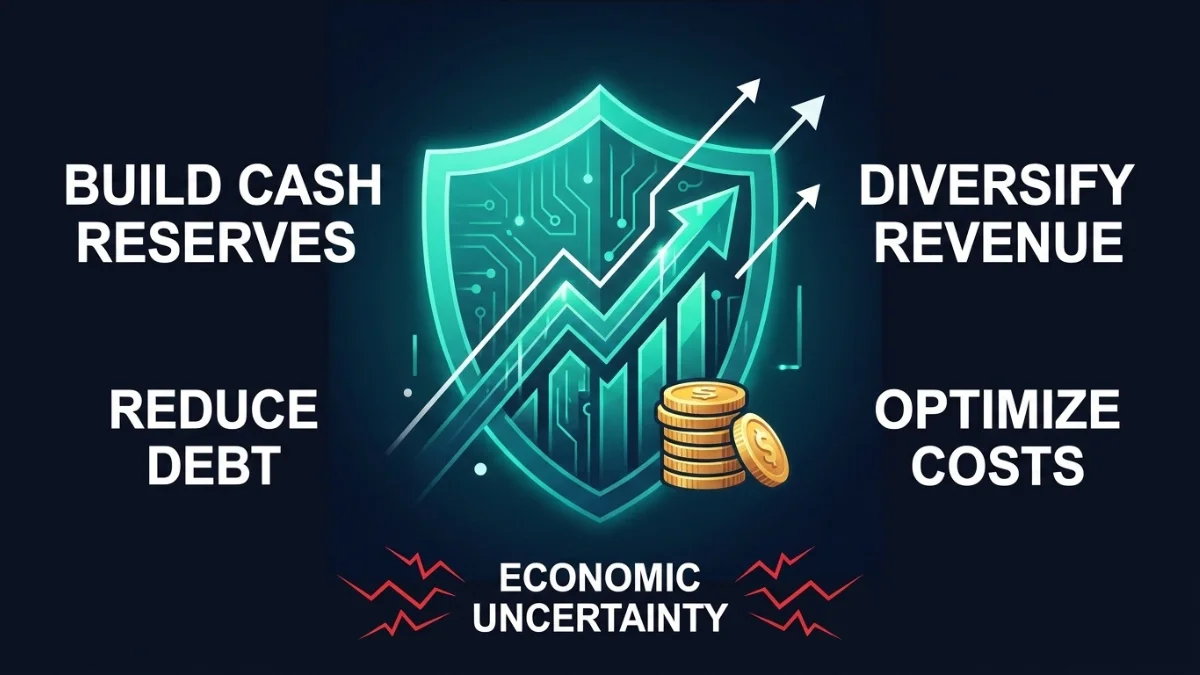
For broader context, see OfferBin’s guide on financial stability during economic uncertainty.
When Did Howard’s Appliance Stores Close?
Howard’s retail operations ended on December 6, 2025.
Reports from Southern California indicated that customers arrived at stores expecting normal operations but instead found them closed. Some customers also reported problems reaching the company about deliveries and outstanding orders.
The shutdown affected Howard’s Southern California retail footprint.
The bankruptcy filings later indicated that the company moved remaining inventory and assets from its retail locations to a warehouse in City of Industry, California.
The company subsequently vacated its retail locations and rejected its commercial leases other than the warehouse lease.
That distinction is important.
The bankruptcy case did not simply involve temporarily closing stores while preparing to reopen them. Court documents described a liquidation process involving the company’s remaining assets.
Is Howard’s Appliance Going Out of Business?
Based on the available bankruptcy filings, Howard’s Appliances was pursuing liquidation rather than a conventional Chapter 11 business turnaround.
A company can use Chapter 11 to reorganize and continue operating, but Howard’s filings described a plan to liquidate remaining inventory and assets, use the proceeds to address creditor claims and ultimately dissolve the business.
That makes Howard’s situation different from a retailer that temporarily closes underperforming locations while keeping its broader business operating.
As of September 16, 2026, the bankruptcy case remains active, but the available court record does not establish that Howard’s retail stores are reopening.
What Does Chapter 11 Mean for Howard’s Appliance?
Chapter 11 is a form of bankruptcy protection generally used to allow a business to reorganize its financial affairs under court supervision.
A Chapter 11 case can involve:
- Restructuring debt
- Selling assets
- Rejecting leases
- Negotiating with creditors
- Developing a bankruptcy plan
- Continuing some or all business operations
- Liquidating assets when reorganization is not practical
The important point in Howard’s case is that Chapter 11 did not necessarily mean the stores would reopen.
The company’s own bankruptcy filings described liquidation of its remaining assets as part of its strategy.
That is why simply seeing the words “Chapter 11” does not tell the whole story. You also need to examine what the debtor’s plan actually proposes.
What Happened to Howard’s Appliance Employees?
The abrupt closure affected Howard’s workforce.
Court filings state that Howard’s laid off nearly all of its employees after deciding to shut down its operations.
The filings also state that the company paid accrued wages, benefits and other compensation due to employees before the bankruptcy filing.
This is an important distinction when discussing employee impact: the closure resulted in widespread layoffs, but bankruptcy records also contain information about amounts owed and payments made to employees.
What Happened to Howard’s Appliance Customers?
Customers were among the people most immediately affected by the shutdown.
Reports following the closure described customers trying to find out what would happen to appliances they had already ordered, including products that had not yet been delivered.
A bankruptcy filing can make customer claims more complicated because customers may become creditors of the bankruptcy estate depending on the circumstances of their transaction.
For example, a customer who paid for merchandise but never received it may have a claim against the company. The treatment of that claim depends on the facts, applicable bankruptcy rules and the court process.
Customers should therefore avoid assuming that every unpaid order automatically receives the same treatment.
The bankruptcy court’s notices explain that a proof of claim is a signed statement describing a creditor’s claim and that creditors may need to file a claim in certain circumstances to preserve their ability to participate in the bankruptcy process.
Anyone with a disputed or unresolved Howard’s order should rely on the official bankruptcy notices and applicable legal guidance rather than assuming that a social-media post or general bankruptcy explanation applies to their individual situation.
What Happened to Howard’s Remaining Inventory?
The bankruptcy process moved toward selling or otherwise disposing of Howard’s remaining assets.
Court documents show that Howard’s sought authorization to conduct an auction and/or bulk sale of personal property and other estate assets.
The company’s remaining inventory and assets had been moved from retail locations to its warehouse in City of Industry.
This is another reason the case should not be viewed simply as a temporary retail closure.
The bankruptcy process involved converting business assets into proceeds that could be used within the bankruptcy estate.
Howard’s Appliance Bankruptcy Timeline
| Date | Event |
|---|---|
| April 2025 | S5 Equity acquired Howard’s Appliances |
| December 6, 2025 | Howard’s retail operations shut down |
| December 10, 2025 | Howard’s filed for Chapter 11 |
| December 12, 2025 | Howard’s filed a Chapter 11 liquidating plan |
| Early 2026 | Bankruptcy proceedings continued and remaining assets became part of the liquidation process |
| April 2026 | Howard’s sought authority for an auction and/or bulk sale of estate property |
| June–August 2026 | Court proceedings continued concerning asset sales and secured-creditor liens |
| August 31, 2026 | NorthPoint Commercial Finance filed a motion seeking conversion from Chapter 11 to Chapter 7 |
| September 1, 2026 | Court set a hearing on the conversion motion |
| September 30, 2026 | Scheduled hearing on the Chapter 7 conversion request |
What Is Happening With Howard’s Appliance in 2026?
The biggest development in the case came at the end of August 2026.
NorthPoint Commercial Finance, a creditor in the bankruptcy case, filed a motion asking the court to convert Howard’s case from Chapter 11 to Chapter 7.
The court subsequently scheduled a hearing for September 30, 2026.
This does not mean the case has already been converted to Chapter 7.
A motion is a request to the court. The court still has to consider the request and enter an appropriate order.
For readers following the company, the September 30 hearing is therefore an important date.
Chapter 11 vs. Chapter 7: What’s the Difference?
| Chapter 11 | Chapter 7 |
|---|---|
| Often used for business reorganization | Generally involves liquidation |
| Can allow a business to restructure | A trustee generally administers the bankruptcy estate |
| A company may continue operating | Business operations may end or be substantially limited |
| Plans and creditor negotiations can play a major role | Non-exempt assets may be liquidated |
| Can also be used in liquidation situations | Primarily associated with liquidation |
The distinction matters in Howard’s case because its Chapter 11 filings already described a liquidation strategy.
The pending Chapter 7 motion is therefore another stage in determining how the bankruptcy estate will ultimately be administered.
It should not be described as an already-decided outcome until the court rules on the motion.
Is Howard’s Appliance Closing All Its Stores?
The available bankruptcy filings indicate that Howard’s had already shut its retail operations and vacated its retail locations.
The company’s remaining assets were moved toward its warehouse and liquidation process.
Therefore, the current bankruptcy story is not primarily about a few underperforming stores being closed while the rest of the chain continues normally.
The evidence points to a much broader shutdown of Howard’s retail business.
Why Did Howard’s Appliance Close Its Stores?
The company’s reported explanation pointed to several financial pressures, including:
- Tariffs
- Lower consumer spending
- Broader macroeconomic challenges
- Financial pressure on the business
- Obligations to creditors and other parties
The company had also undergone an ownership change earlier in 2025, when S5 Equity acquired Howard’s.
It is important to distinguish the documented sequence of events from speculation about causation. The fact that an acquisition happened before the bankruptcy does not by itself establish that the acquisition caused the bankruptcy.
What Happens Next for Howard’s Appliance?
The immediate question is what happens with the pending Chapter 7 conversion motion.
The scheduled September 30, 2026 hearing may provide the next major development in the case.
Beyond that, the bankruptcy process can involve:
- Further asset sales
- Resolution of creditor claims
- Distribution of available proceeds
- Court orders concerning secured creditors
- Additional bankruptcy filings
- Possible conversion or continuation of the case
- Final administration of the bankruptcy estate
The exact outcome depends on future court orders and the administration of the case.
Readers should therefore be cautious with claims that Howard’s will reopen, that all creditors will be paid in full, or that a specific future outcome has already been decided.
What Should Customers Watch For?
Customers with unresolved Howard’s transactions should pay attention to official bankruptcy notices rather than relying only on older news stories.
Important information can include:
- Proof-of-claim deadlines
- Court notices
- Orders affecting the bankruptcy estate
- Information about customer claims
- Asset-sale developments
- Any notices concerning distributions
A customer should also keep documentation such as:
- Purchase receipts
- Order confirmations
- Payment records
- Delivery records
- Refund communications
- Emails or other correspondence
The treatment of an individual customer claim can depend on the specific circumstances, so this article should not be treated as personalized legal advice.
What Does Howard’s Appliance Chapter 11 Mean for the Retail Industry?
Howard’s case also illustrates a broader problem facing retailers.
A retailer can be affected by several pressures simultaneously:
- Changing consumer demand
- Higher costs
- Inventory commitments
- Supplier obligations
- Debt
- Rent and real-estate costs
- Financing conditions
- Competition
- Supply-chain disruption
When several pressures occur together, a retailer may have fewer options for maintaining normal operations.
Howard’s case is particularly notable because its bankruptcy filing came after a long history in Southern California and shortly after its acquisition by S5 Equity.
That combination makes the case useful as a real-world example of how quickly the financial position of a retail business can change.
Frequently Asked Questions
Why did Howard’s Appliance file for Chapter 11?
Howard’s reported that tariffs, declining consumer spending and broader macroeconomic conditions contributed to the decision. Bankruptcy filings also show that the company was dealing with financial obligations and moved toward liquidating its remaining assets.
Is Howard’s Appliance going out of business in 2026?
The available bankruptcy filings indicate that Howard’s planned to liquidate its remaining assets and dissolve the business. Its retail operations had already shut down. However, the bankruptcy case itself remains active, and future court orders will determine how the case concludes.
Is Howard’s Appliance still open?
Howard’s Southern California retail operations closed on December 6, 2025. Available bankruptcy filings indicate that the company subsequently vacated its retail locations and moved remaining assets toward the liquidation process.
Is Howard’s Appliance closing all its stores?
The company’s retail operations were shut down across its Southern California locations in December 2025. Court filings subsequently described the company’s retail leases as vacated or rejected, apart from its warehouse lease.
What happened to Howard’s Appliance customers?
Some customers had orders that had not been delivered when the stores closed. Customers with unresolved claims may need to follow the bankruptcy court’s procedures and notices applicable to their claims.
What happened to Howard’s Appliance employees?
Court filings state that Howard’s laid off nearly all of its employees after deciding to permanently shut down its operations.
What does Chapter 11 mean for Howard’s Appliance customers?
Chapter 11 places the company’s financial affairs under bankruptcy-court supervision. For customers with unresolved claims, the bankruptcy process can determine how and when those claims are handled. The specific treatment depends on the individual circumstances and court process.
Is Howard’s Appliance becoming Chapter 7?
A creditor, NorthPoint Commercial Finance, filed a motion on August 31, 2026, requesting conversion of the case from Chapter 11 to Chapter 7. A hearing was scheduled for September 30, 2026. The filing of the motion does not itself mean the court has approved the conversion.
When is the next Howard’s Appliance bankruptcy hearing?
The bankruptcy docket lists a hearing on the Chapter 7 conversion motion for September 30, 2026, at 10:00 a.m. in the U.S. Bankruptcy Court for the Central District of California in Los Angeles.
What happened to Howard’s Appliance inventory?
Court documents indicate that remaining inventory and assets were moved from the retail stores to the company’s warehouse in City of Industry. The bankruptcy process subsequently involved efforts to sell or otherwise dispose of estate assets.
The Bottom Line on Howard’s Appliance Chapter 11
Howard’s Appliances’ bankruptcy story began with an abrupt retail shutdown in December 2025, followed by a Chapter 11 filing. But the case did not develop into a straightforward store-reorganization story.
Court filings indicate that Howard’s moved toward liquidation, including the sale of remaining assets, while nearly all employees were laid off and retail locations were vacated.
As of September 16, 2026, the case remains active. The latest major development is a creditor’s request to convert the Chapter 11 case to Chapter 7, with a hearing scheduled for September 30.
That means the Howard’s bankruptcy story is still developing.
For broader business and financial education, you can explore OfferBin’s Business Guide and its resources on managing financial stability during uncertain economic conditions.